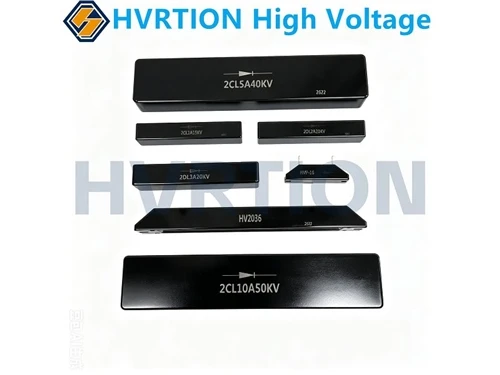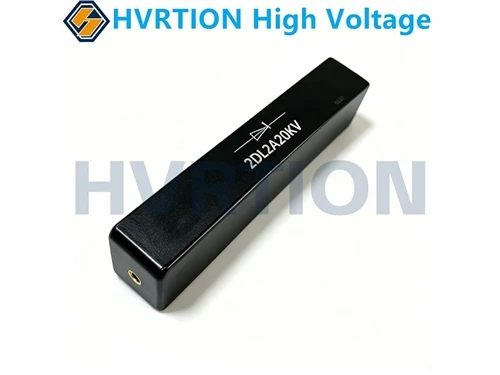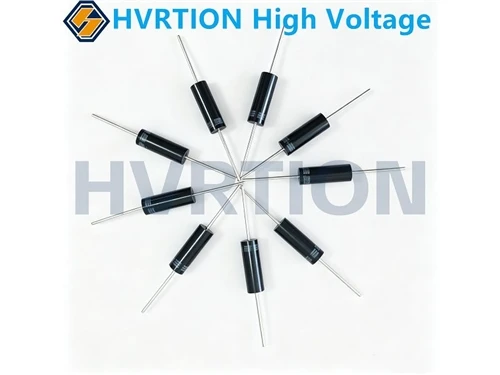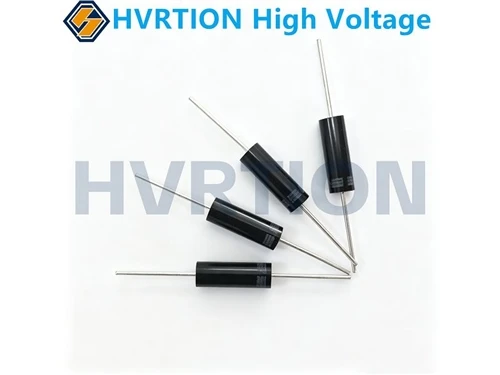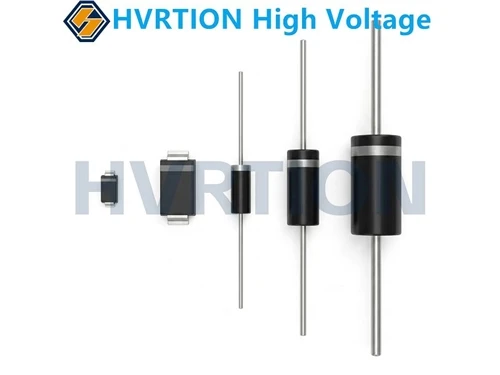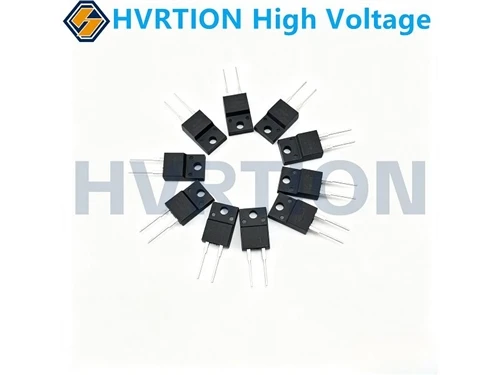
A high-voltage diode is a semiconductor device specifically designed for high-voltage environments. Its core function is to enable unidirectional current conduction and withstand high-voltage surges. Through special structural design and material selection, these devices can maintain stable operation at kilovolt levels and are widely used in power conversion, medical equipment, and industrial control systems.
In principle, the biggest difference between a high-voltage diode and a traditional diode lies in its voltage withstand capability. In semiconductor manufacturing, by controlling the doping concentration and junction width of the PN junction, a thicker depletion layer is formed to disperse the high electric field intensity. When a reverse voltage is applied, the wider depletion layer effectively reduces the electric field gradient, preventing avalanche breakdown. Furthermore, special designs such as mesa structures or field plate technology can further optimize the electric field distribution, enabling the device to remain in a blocking state even at 4kV or higher voltages.