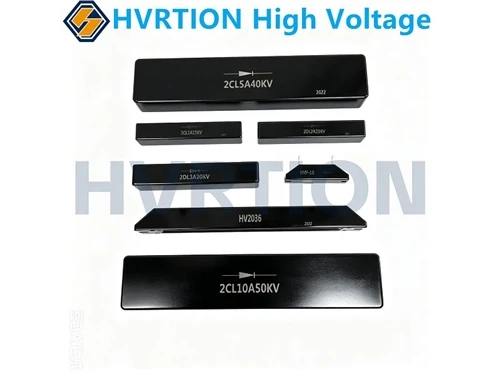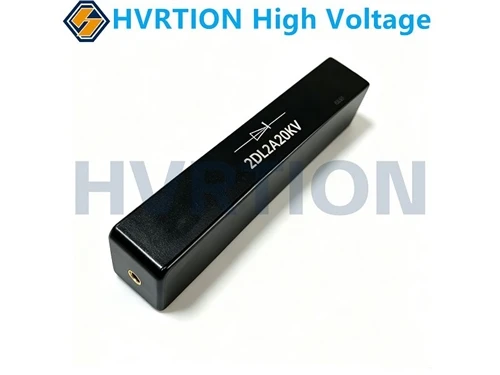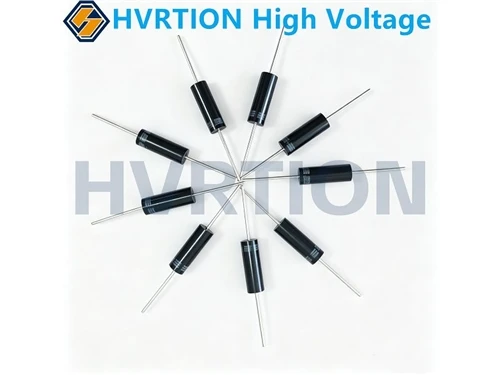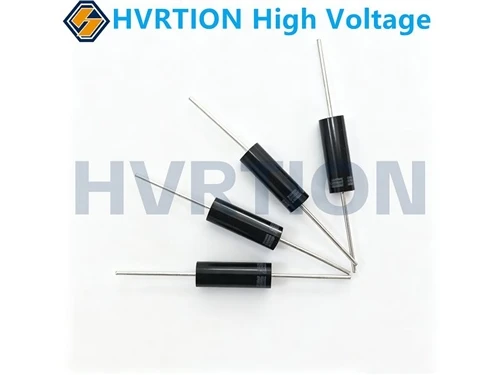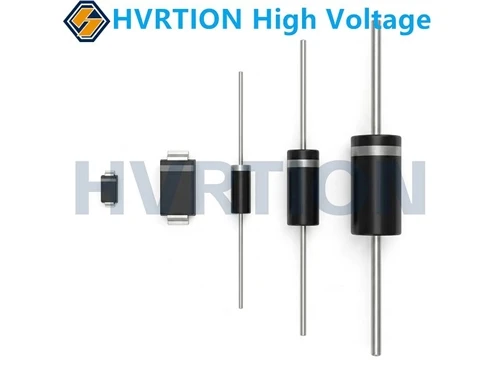
1. The peak rated forward rectified current of the silicon stack used should not be less than its maximum current under normal operating conditions. Especially for silicon stacks in DC high-voltage equipment (e.g., electrostatic precipitators) where flashover or breakdown frequently occurs on the load side under normal operating conditions, the If value should be appropriately increased. Furthermore, the specified rated rectified current value If generally refers to the permissible value under natural convection cooling; if oil cooling is used, the rectified current can approximately double.
2. Based on the frequency characteristics, high-voltage silicon stacks can be divided into power frequency high-voltage silicon stacks (represented by 2DL) and high-frequency high-voltage silicon stacks (represented by 2DGL). The rectified current frequency of a power frequency high-voltage silicon stack should be below 3 kHz, while the rectified current frequency of a high-frequency high-voltage silicon stack can be above 3 kHz. For high-frequency voltage rectification, a corresponding high-frequency high-voltage silicon stack should be used.
3. The nominal rated rectified current value of a high-voltage silicon stack refers to the average rectified current value when the ambient temperature is room temperature. If operating at higher ambient temperatures, the permissible rectified current value should be reduced accordingly. Figure 2 shows the relationship between ambient temperature and the percentage of the allowable average rectified current.