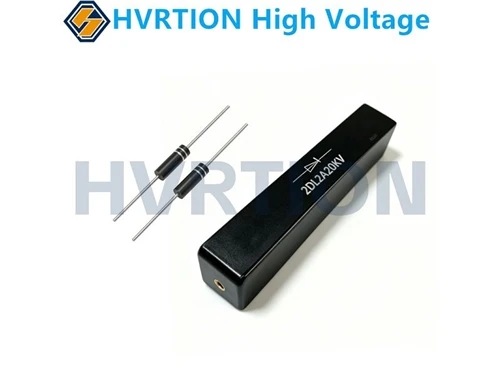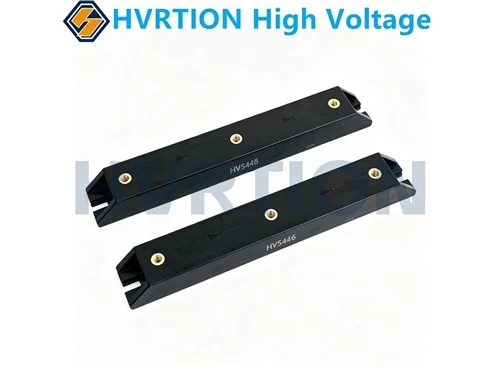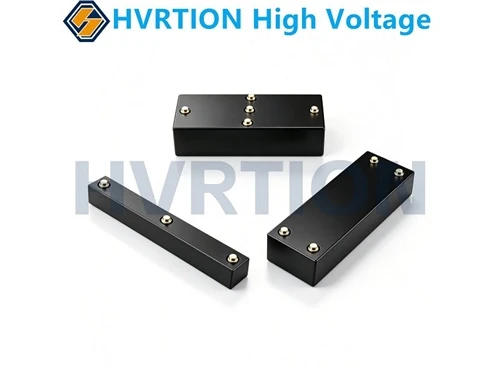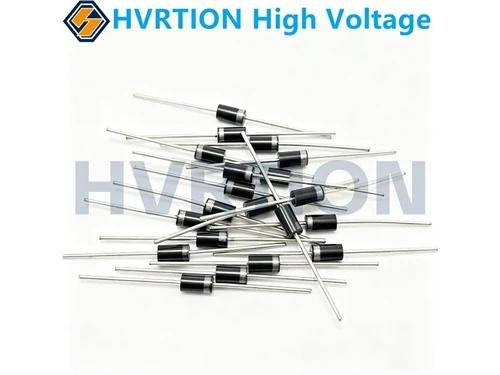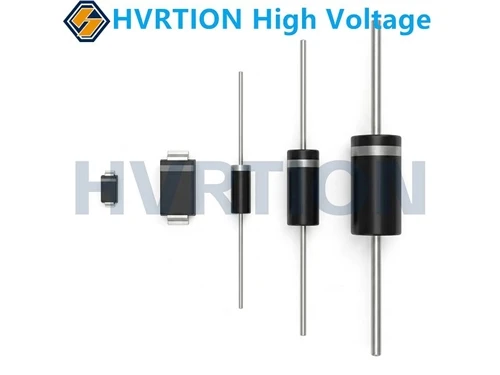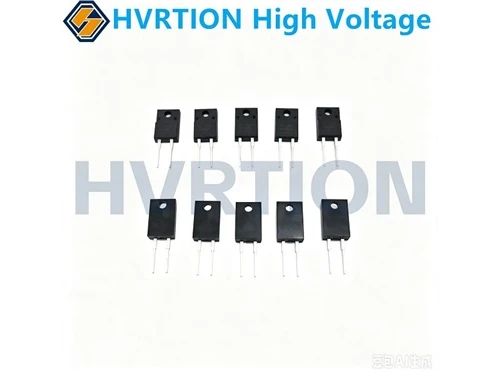
High-voltage rectifiers achieve rectification based on the unidirectional conductivity of diodes, allowing current to flow from the anode to the cathode while preventing reverse current flow, thus converting AC to DC.
High reverse breakdown voltage is the most critical characteristic of high-voltage rectifiers, typically designated VR, VRRM, or VRWM, with values usually ranging from hundreds to thousands of volts or even higher. When selecting a high-voltage rectifier, the system's normal operating voltage should be no less than 70-80% of the rated voltage, with a margin of at least 20-30%. Peak values for transient voltages such as surges and overvoltages must also be assessed.
Key parameters include maximum repeatable peak reverse voltage (VRRM/VRWM/VR), which is the primary indicator; average forward rectified current (IF(AV)), representing the continuous current handling capability under specified thermal conditions; forward voltage drop (VF), typically between 1V and 3V, affecting conduction losses and efficiency; reverse leakage current (IR), a critical parameter especially under high temperature and high voltage conditions, affecting static power dissipation and thermal stability; reverse recovery time (trr), due to the need for thicker internal intrinsic layers or drift regions to achieve high breakdown voltage, resulting in a typically longer reverse recovery time, which needs attention in high-frequency applications; and non-repetitive peak surge current (IFSM), representing the ability to withstand brief overloads.
Compared to ordinary diodes, high-voltage rectifiers have special internal structures (such as PIN structures) to achieve high breakdown voltage, resulting in typically longer reverse recovery times and greater power handling requirements. Therefore, they have higher requirements for thermal design and often employ metal packaging.